Chemical tank trucks carry corrosive, flammable, and toxic liquids through busy roads, industrial yards, and loading terminals. A loose valve cap, damaged hose, or incorrect placard can create serious consequences within seconds. Therefore, safe transport depends on reliable equipment, trained people, documented procedures, and disciplined inspections.
What are the safety regulations for chemical tank trucks? The answer depends on the chemical, tank design, transport route, and applicable national or regional requirements. This guide introduces ten widely recognized safety areas, including vehicle inspections, tank certification, secure loading, grounding, pressure control, personal protective equipment, emergency planning, driver training, route management, and accurate documentation. Operators should confirm every requirement with the relevant transport authority and chemical safety standard.
Small details matter.
For example, a competent inspection may check valve covers, hose connections, tire condition, emergency shutoff systems, fire extinguishers, and spill-control materials before departure. A driver should understand the cargo’s hazards, not merely carry paperwork. Loading staff should verify product compatibility and prevent overfilling, contamination, or unstable weight distribution. During unloading, clear communication and controlled pressure are essential.
No checklist is perfect. Human fatigue, changing weather, and rushed schedules can weaken even strong procedures. That uncomfortable reality deserves attention. The safest operators review near misses, correct recurring weaknesses, and encourage workers to stop unsafe activities without fear. This introduction provides a practical foundation, but site-specific risk assessments and current regulations must guide final decisions.
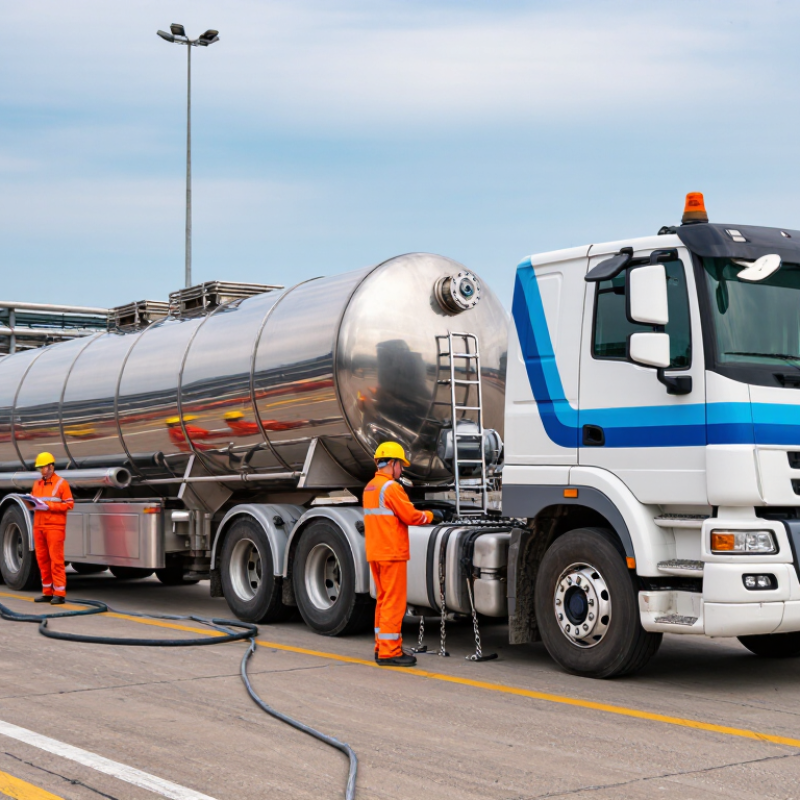
Chemical Tank Truck Classification and Regulatory Scope
Chemical tank trucks are classified by more than their tank shape. Regulators examine the cargo, pressure rating, construction material, capacity, and intended route. A truck carrying corrosive liquid may require different controls from one carrying flammable liquid. The same vehicle can also fall under several regulatory categories when its cargo changes.
The regulatory scope usually covers the tank, chassis, loading equipment, driver qualifications, route planning, and emergency controls. Rules may differ between local roads, national highways, and cross-border transport. Authorities often require approved tank designs, visible hazard markings, inspection records, leak checks, and documented maintenance. Pressure-vessel requirements become especially important for compressed or heated cargo. Product classification must match shipping papers and the physical condition of the load.
In fleet inspections, small details often reveal larger risks. A worn grounding cable, unclear label, or poorly closed valve can delay an emergency response. Training should include loading supervision, personal protective equipment, spill isolation, and communication with emergency services. Written procedures are useful, but they cannot replace competent judgment at the loading bay. That boundary is not always neat. Some operators treat classification as paperwork only, which is a serious weakness. Regulations also change, and older procedures may quietly become inaccurate. A careful review should compare the cargo’s current hazard data with the tank certificate, driver training, inspection dates, and route restrictions. Local requirements still need confirmation.
10 Best Chemical Tank Truck Safety Regulations: Classification and Regulatory Scope
Chemical tank truck requirements are determined by the dangerous goods classification assigned to the substance.
The UN Model Regulations recognize nine hazard classes. Classes 1, 2, 4, 5, and 6 contain formal divisions, while Classes 3, 7, 8, and 9 do not.
In practice, tank design, material compatibility, pressure protection, labeling, loading procedures, driver training, route controls, and emergency response requirements depend on the proper shipping name, hazard class, packing group, and applicable national or international rules such as ADR, RID, or the U.S. DOT Hazardous Materials Regulations.
Tank Design, Inspection, and Hazardous Material Compatibility
A chemical tank truck is a system, not just a vessel on wheels. Its shell, closures, valves, and internal baffles must suit the material and the route. A smooth interior can simplify cleaning, while well-designed baffles help limit liquid surge during braking. Small details matter. A worn gasket or poorly secured fitting can become a serious leak point. Material selection should account for chemical properties, temperature, and expected contact time, rather than relying on appearance alone.
Inspection should be practical and documented. Before loading, check the shell for dents, corrosion, or signs of previous leakage. Examine hoses, seals, and valves under good lighting; residue around a connection deserves attention. Scheduled inspections should follow the applicable transport rules and equipment requirements, with findings recorded and defects corrected before service. A checklist helps, but it cannot replace a trained person noticing something unusual. That judgment is harder to standardize.
Compatibility deserves equal care. Confirm that the tank lining, seals, hoses, and fittings are suitable for the specific cargo, using current technical data from reliable sources. Never assume two similar-looking products behave alike. After unloading, use a cleaning method appropriate to the material and verify the tank is ready for its next load. In practice, records can be incomplete, and rushed handovers happen. That is precisely when a second compatibility check is worth the extra minute.
10 Best Chemical Tank Truck Safety Regulations - Tank Design, Inspection, and Hazardous Material Compatibility
| # |
Regulation / Reference |
Core Safety Requirement |
Practical Application to Chemical Tank Trucks |
| 1 |
49 CFR § 173.24 — General packaging requirements |
Hazardous materials must be packaged so they cannot escape under normal conditions of transportation. Packaging must be compatible with its contents and able to withstand expected handling and environmental conditions. |
Confirm the cargo tank and its closures are suitable for the specific chemical, operating pressure, temperature, and transport conditions. |
| 2 |
49 CFR § 173.24b — Additional requirements for bulk packagings |
Bulk packagings must meet applicable design, construction, and service requirements. Materials of construction and package components must be compatible with the lading. |
Check that the tank shell, lining, valves, gaskets, and other product-contact parts are appropriate for the substance being carried. |
| 3 |
49 CFR Part 178, Subpart J — Specification MC 330 and MC 331 cargo tanks |
Sets construction and equipment specifications for certain cargo tanks, including tanks used for specified compressed gases and other authorized materials. |
Verify the tank’s specification and markings match the material and service authorized for that cargo tank. Not every chemical tank is an MC 331 tank. |
| 4 |
49 CFR Part 178, Subpart L — Specification DOT 406, 407, and 412 cargo tanks |
Establishes design and construction requirements for these cargo tank specifications. The applicable specification depends on the material and its transportation requirements. |
Use the correct authorized tank type for the regulated material; confirm the tank’s specification plate and markings before loading. |
| 5 |
49 CFR § 180.407 — Cargo tank inspection and testing |
Requires specified cargo tank inspections and tests, including visual inspections, leakage tests, pressure tests, and thickness tests where applicable. Inspection and test intervals vary by tank type and service. |
Keep required inspection and test records current, and do not use a tank when a required inspection or test is overdue or the tank does not pass. |
| 6 |
49 CFR § 172.101 — Hazardous Materials Table |
Identifies regulated hazardous materials and specifies key transport information, including hazard class, identification number, packing group, and applicable packaging authorizations. |
Use the correct shipping description and confirm that the proposed packaging and transport conditions are authorized for the material. |
| 7 |
49 CFR § 177.834 — General requirements for loading and unloading |
Establishes general requirements for handling hazardous materials during loading and unloading, including attendance and precautions against accidental release where applicable. |
Follow the applicable attendance, securement, and transfer precautions during product transfer; use a controlled procedure for connecting and disconnecting transfer lines. |
| 8 |
49 CFR § 177.837 — Class 3 (flammable liquid) materials |
Provides additional requirements for the transportation of Class 3 materials, including precautions during loading and unloading and restrictions relevant to ignition sources. |
For flammable-liquid cargoes, apply required ignition-control precautions and follow the specific loading and unloading provisions for the operation. |
| 9 |
49 CFR § 172.704 — Hazmat employee training |
Requires applicable hazardous materials employees to receive general awareness, function-specific, safety, and security awareness training, with additional in-depth security training when required. |
Ensure drivers and other hazmat employees are trained for their assigned duties and receive recurrent training at least once every three years. |
| 10 |
49 CFR § 172.602 — Emergency response information |
Requires emergency response information to accompany hazardous materials shipments in the manner prescribed by the regulations and to be accessible during transportation. |
Provide shipment-specific emergency information and ensure it is readily available to the driver and emergency responders if an incident occurs. |
Scope: This table summarizes selected United States federal hazardous materials transportation requirements in 49 CFR. The applicable rules depend on the material, tank specification, shipment, and operating conditions; consult the current regulations and qualified safety personnel for compliance decisions.
Driver Training, Route Planning, and Safe Transport Practices
10 Best Chemical Tank Truck Safety Regulations
Driver training must cover more than vehicle handling. Drivers need practical instruction in hazard communication, personal protective equipment, loading checks, spill response, and emergency reporting. They should inspect valves, hoses, tires, brakes, and tank closures before every trip. A short practice drill can reveal confusion before a real incident occurs. Fatigue checks matter too. Tired drivers may miss a warning sign or misread a route restriction.
Route planning should consider chemical compatibility, bridge limits, tunnels, steep grades, weather, traffic, and emergency access. Do not rely on GPS alone. Approved routes should be reviewed before departure and updated when construction or severe weather changes conditions. Safe transport also requires proper labeling, secure connections, closed valves, load stability, and clear communication with dispatchers. Records should document inspections, training, maintenance, and deviations from the plan. Field audits often find small weaknesses, such as a loose cap or outdated emergency contact sheet. These details deserve attention.
Tips: Keep emergency instructions inside the cab. Use a simple pre-trip checklist. Confirm rest locations in advance. Encourage drivers to report near misses without fear. No plan is perfect. A missed step should lead to honest review, not silent repetition.
Emergency Response, Incident Reporting, and Regulatory Compliance
A chemical tank truck emergency begins with clear information. Drivers should keep shipping papers, emergency contacts, and current safety data sheets accessible. If a leak, collision, or unusual vapor appears, stop in a safe location, warn others, and contact emergency services. Do not approach an unknown release. Small details matter: wind direction, visible damage, and the product name can help responders assess risk.
Response plans need practice, not just a folder in the cab. Dispatchers should know who contacts responders, customers, and relevant authorities. Crews should follow the incident commander's instructions and avoid cleanup unless trained and equipped for that specific material. Keep people away from the scene. A confusing handoff can delay help; it happens, so plans should name a clear backup contact.
Reporting rules differ by location, product, and incident severity. Carriers should verify current requirements before a trip and report qualifying events within the applicable deadlines. Record the time, location, observed conditions, actions taken, and notifications made. Preserve inspection and maintenance records, too. A report may feel repetitive, but accurate records reveal patterns, such as recurring valve damage. No checklist catches everything. Review procedures after near misses, and be honest about what the team could not do well.
Conclusion
This guide explains What are the safety regulations for chemical tank trucks and how they support safe operations from preparation to delivery. It covers truck classification, applicable regulatory scope, tank design standards, inspection routines, and material compatibility checks. Special attention is given to confirming that tanks, valves, seals, and protective equipment are suitable for the chemical being transported and maintained in reliable condition.
The article also outlines safe loading and unloading procedures, spill prevention, containment controls, and secure connection practices. It discusses driver training, protective equipment, route planning, weather and traffic considerations, and defensive transport methods. Finally, it highlights the importance of emergency response plans, incident reporting, communication with authorities, recordkeeping, and ongoing compliance reviews. Together, these measures help reduce leaks, exposure, vehicle incidents, and environmental harm while promoting consistent, responsible chemical transportation.

 Yale Truck