2026 Top Fire Truck Types Why Do They Carry So Much Water?

Time:2026-09-20 Author:Sophia
0%

Modern fire trucks are more than red vehicles with flashing lights. They are mobile water systems, rescue platforms, and carefully organized tool rooms. Understanding why do fire trucks carry so much water begins with one simple problem: fire grows faster than crews can establish a reliable supply.

A standard fire engine may carry several hundred gallons. A rural water tanker can carry thousands. Aerial ladder trucks usually carry less water because their main work involves rescue, ventilation, and elevated access. Tank size depends on local hydrants, road conditions, building density, and expected fire behavior. Fire apparatus instructor Chris Daley explains, “Water is time.” That short statement captures the practical reason. Water buys firefighters minutes while they search rooms, protect escape routes, and cool dangerous surfaces.

A large tank also helps when hydrants are distant, damaged, frozen, or already serving another engine. At a warehouse fire, one attack line can consume hundreds of gallons quickly. Several lines may operate together. The truck’s water disappears sooner than many people expect.

Still, carrying more water is not automatically better. A full tank adds substantial weight, affects braking, and can reduce maneuverability on narrow streets. Firefighters must balance capacity, pumping power, crew safety, and water supply planning. This is where the subject becomes less obvious. More water helps, but it cannot replace training, coordination, or sound tactics.

The answer is practical, not dramatic. Fire trucks carry so much water because early water is often the fastest way to slow heat, protect people, and prevent a small fire from becoming an overwhelming one.
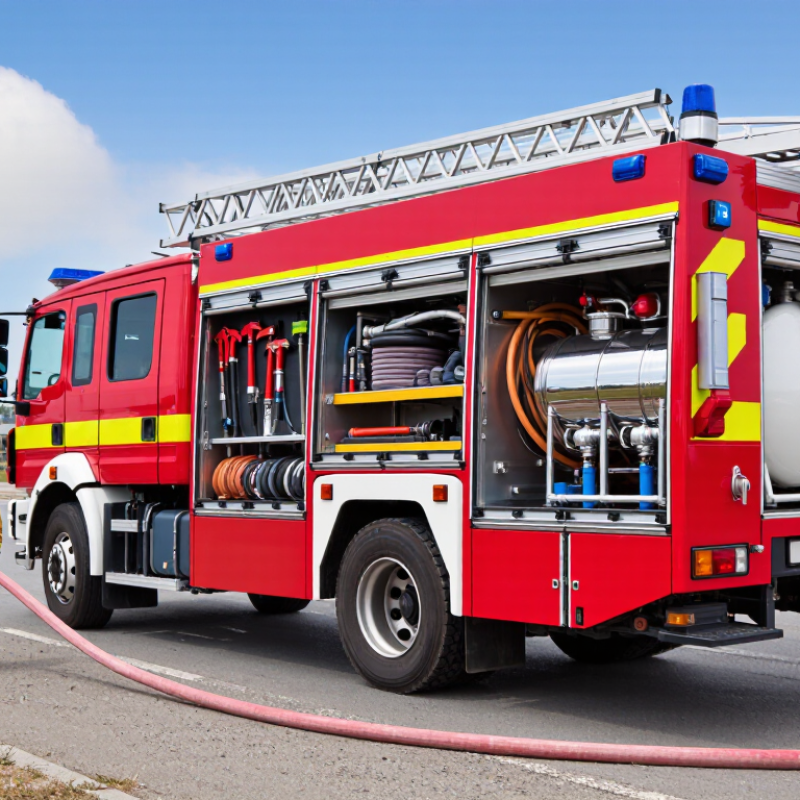
2026 Top Fire Truck Types Why Do They Carry So Much Water?

Fire Truck Basics: What They Are Designed to Do

Fire trucks are mobile work platforms, not just oversized water tanks. An engine carries water, a pump, hoses, breathing equipment, and thermal imaging tools for the first attack. Aerial trucks add ladders and elevated streams. Rescue units support ventilation, medical care, and technical operations. Tankers, also called tenders, move larger water supplies to areas without reliable hydrants.

The water supports speed during the first critical minutes. NFPA’s Fire Loss in the United States During 2023 reported about 1.39 million fires and approximately $20.9 billion in direct property damage. These figures show why crews must act before a permanent water supply is established. NFPA 1900 also sets detailed requirements for fire apparatus, including pumping, hose, tank, and safety functions. Tank sizes vary by mission, but many frontline engines carry several hundred gallons. That supply may last only minutes during a strong attack. It is a beginning, not a complete solution.

Tips: Check the truck’s pump, hose load, tank level, and ladder clearance before dispatch. Crews should match apparatus to local risks, road access, hydrant spacing, and building height. A larger tank can create false confidence. Water can run out quickly, especially with multiple lines operating. I have found that simple equipment checks often matter more than impressive capacity. The design is practical, but never perfect.arsuaq

The Main Fire Truck Types Used in 2026

2026 Top Fire Truck Types: Why Do They Carry So Much Water?
The Main Fire Truck Types Used in 2026

Fire trucks in 2026 are built for different hazards, not one universal emergency. A pumper, often called an engine, carries water, hose, pumps, and basic rescue tools. Its onboard tank supports the first attack before hydrant water is connected. That delay can matter when flames are already pushing through a doorway.

A tanker or water tender carries far more water to rural scenes with limited hydrants. Aerial ladder trucks bring height, rescue access, and elevated water streams to taller buildings. Rescue trucks usually carry specialized cutting, lifting, medical, and lighting equipment instead of large tanks. Wildland units are smaller and more maneuverable, while airport crash trucks use high-flow systems for aircraft emergencies.

Tank sizes vary by local standards, road conditions, and crew needs. In practical drills, crews must balance water weight against acceleration, braking, and access on narrow streets. More water sounds safer. It is not always better. A heavy vehicle may reach a remote fire, but it can be harder to position quickly. Firefighters also rely on hydrants, ponds, portable tanks, and coordinated water shuttles. I once assumed the biggest tank offered the best response; field planning showed that pump reliability, hose layout, and trained decisions often matter more. Even advanced equipment cannot replace accurate risk assessment.

2026 Top Fire Truck Types: Why Do They Carry So Much Water? — The Main Fire Truck Types Used in 2026

Fire Truck Type Primary Mission Typical Water Tank Capacity Typical Pump Capacity Typical Aerial Equipment Why the Water Supply Matters
Structural Engine / Pumper First-response vehicle for building fires, vehicle fires, medical calls, and hose-line operations. 500–1,000 gal (1,893–3,785 L) 1,000–2,000 gal/min (3,785–7,571 L/min) Usually none; hose and ground-ladder equipment are standard. Provides an immediate water source while the crew establishes a hydrant connection or receives water from a tanker.
Quintuple Combination Pumper (Quint) Combines engine, pump, water tank, hose, ground ladders, and an aerial ladder or platform. 300–500 gal (1,136–1,893 L) 1,000–2,000 gal/min (3,785–7,571 L/min) Approximately 75–110 ft (23–34 m), depending on configuration. Supports both interior attack and elevated master streams before a dependable water supply is fully established.
Aerial Ladder Truck Provides elevated access for rescue, ventilation, firefighter operations, and high-level hose streams. Often 300–500 gal (1,136–1,893 L) Commonly 1,000–2,000 gal/min (3,785–7,571 L/min) Approximately 75–135 ft (23–41 m). The onboard tank gives the aerial crew a short-term water reserve while supply lines are being connected.
Water Tender / Tanker Transports and delivers large volumes of water to incidents without nearby hydrants. 1,000–3,500 gal (3,785–13,249 L) Often 500–1,250 gal/min (1,893–4,732 L/min) Generally none. Maintains water shuttle operations in rural areas and can supply portable tanks used by attack engines.
Wildland / Brush Truck Fights grass, brush, and forest fires while travelling on narrow or uneven terrain. 200–1,000 gal (757–3,785 L) Approximately 50–500 gal/min (189–1,893 L/min) Usually none; may carry a front bumper turret or monitor. A self-contained tank allows rapid attack in remote areas where hydrants and large-diameter supply lines are unavailable.
Airport Rescue and Fire-Fighting Vehicle Responds to aircraft emergencies, fuel fires, and rescue incidents on or near runways. 1,000–3,000 gal (3,785–11,356 L) Approximately 750–2,000 gal/min (2,839–7,571 L/min) Roof or bumper turrets; some units use piercing nozzles. Large onboard quantities are essential because aircraft incidents can involve intense fuel fires and limited hydrant access.
Heavy Rescue Truck Handles technical rescue, vehicle extrication, collapse response, hazardous materials support, and medical incidents. None–300 gal (0–1,136 L) Usually auxiliary or portable pump equipment. Typically none. Water is not its primary function; interior space is reserved for hydraulic tools, shoring, breathing-air equipment, and rescue systems.
Foam Tender / Specialty Foam Unit Supplies water and firefighting foam concentrate for industrial, fuel, chemical, or aviation incidents. Varies widely; commonly 1,000–3,000 gal (3,785–11,356 L) Often 500–2,000 gal/min (1,893–7,571 L/min) May include fixed monitors or foam-capable turrets. Water carries and spreads foam solution, which helps suppress flammable-liquid vapors and reduce reignition.

Note: Capacities and pump ratings are common operational ranges rather than universal specifications. Actual values vary with local regulations, terrain, staffing, vehicle size, and the water-supply system.

How Water Tanks and Pumps Support Firefighting

2026 Top Fire Truck Types: Why Do They Carry So Much Water?

A fire truck’s water tank provides an immediate supply when hydrants are distant, damaged, or already occupied. Tank sizes vary by vehicle type and operational need. A compact urban truck may carry less water, while a rural tanker can transport several thousand gallons. The extra capacity buys firefighters valuable minutes. Every second matters.

The pump turns stored water into controlled firefighting force. It draws water from the tank, increases pressure, and sends it through hoses, monitors, or aerial lines. Operators adjust flow according to fire intensity, hose length, elevation, and nozzle design. Too little pressure weakens the stream. Too much can damage equipment or make hose handling dangerous. Pump gauges must be watched continuously.

Water tanks also support relay operations. Crews can connect to hydrants, ponds, or portable tanks as the onboard supply decreases. Proper baffles reduce water movement during travel, improving vehicle stability around corners. A large tank is not always better. Added weight can slow acceleration, increase stopping distance, and limit access on weak roads. Regular inspections are essential, including checking valves, pump seals, tank walls, and freeze protection. In practice, firefighters balance water volume, pump performance, road conditions, and crew control. That balance is not always perfect.

2026 Top Fire Truck Types: Why Do They Carry So Much Water?

Fire trucks balance onboard water storage with pump capacity. Tankers carry the largest reserves for areas with limited hydrants, while pumpers and aerial trucks use powerful pumps to deliver water quickly at the incident. The figures below show representative capacities commonly used in modern firefighting operations; actual specifications vary by vehicle configuration and local regulations.

Why Different Emergencies Require Different Water Capacities

2026 Top Fire Truck Types: Why Do They Carry So Much Water?

Fire trucks carry different water capacities because emergencies rarely occur in identical conditions. A city pumper may hold several hundred gallons for immediate attack before connecting to a hydrant. A rural engine often needs a larger tank because hydrants may be distant or unavailable. Wildland trucks usually balance water storage with narrow roads, steep ground, and limited access. Every gallon adds weight.

Structure fires can consume water quickly, especially when flames spread through multiple rooms or floors. Rescue units may carry less water because their main equipment supports medical response, vehicle extrication, or technical rescue. Airport and industrial fire trucks often need substantial capacity for large fuel-related incidents and extended protection. Capacity also depends on pump output, hose size, staffing, terrain, and expected response support. A bigger tank sounds safer. That assumption can mislead.

Tips: Match water capacity to the local risk assessment, not appearance. Check hydrant spacing, refill time, road limits, and seasonal access before choosing a truck type. During training, crews should measure actual flow and estimate how long onboard water will last. Tables help, but field conditions remain unpredictable. I have seen planning focus too heavily on tank size, while refill logistics received less attention. That weakness deserves review.

How Fire Trucks Balance Water, Equipment, and Mobility

2026 Top Fire Truck Types: Why Do They Carry So Much Water?

How Fire Trucks Balance Water, Equipment, and Mobility

A fire truck is a mobile water system, but its tank is only one part of the design. Pumpers carry water for the first attack, while tankers support areas with limited hydrants. Aerial trucks add ladders, rescue tools, and elevated water lines. Every added litre increases weight and affects braking, steering, and road stability.

Engineers calculate axle loads, tank placement, pump capacity, and equipment access together. Water is usually stored low in the body to reduce body roll during turns. Baffles inside the tank help control sudden water movement, although they cannot remove it completely. Crews also carry hoses, breathing equipment, medical kits, power tools, and protective clothing. That equipment can make a well-equipped vehicle feel surprisingly crowded. The balance is never perfect. A larger tank may extend operating time, but it can reduce mobility on narrow streets or weak bridges.

Tips: Check the truck’s load plan before each shift. Keep heavy tools secured and evenly distributed. Watch tire pressure and tank levels during movement. Practice turning with a partially filled tank, because shifting water changes handling. Small details matter. An experienced operator still needs reminders. Even careful planning can miss one awkward tool, one steep driveway, or one muddy shoulder.

FAQS

What is a fire truck designed to do?

It is a mobile work platform, not merely a large water tank. It carries pumps, hoses, breathing equipment, and thermal imaging tools. Some vehicles also support ladders, medical care, or technical rescue.

Why do fire trucks carry onboard water?

The tank provides immediate water when hydrants are distant, damaged, or occupied. This supply supports the first attack. It may last only a few minutes.

How does a fire truck pump work?

The pump draws water from the tank and increases its pressure. It sends water through hoses, monitors, or elevated lines. Operators adjust flow for hose length, height, and fire intensity.

Can too much pump pressure create problems?

Yes. Excessive pressure can damage equipment or make hoses difficult to control. Gauges need continuous attention during pumping operations. Too little pressure weakens the stream.

Why do different fire trucks carry different water amounts?

Urban engines may carry several hundred gallons for quick attacks. Rural tankers can transport several thousand gallons. The correct capacity depends on roads, hydrants, buildings, and local risks.

Is a larger water tank always better?

No. Extra water adds weight and may reduce acceleration. It can increase stopping distance and restrict access on weak roads. A large tank can create false confidence.

What happens when the onboard water supply decreases?

Crews can connect to hydrants, ponds, or portable tanks. Several vehicles may support a relay operation. Water planning must continue before the tank becomes empty.

What equipment checks should crews complete before dispatch?

They should check the pump, hose load, tank level, and ladder clearance. Inspections should also cover valves, seals, tank walls, and freeze protection. Simple checks often matter more than impressive capacity.

Conclusion

In 2026, fire trucks are specialized emergency vehicles designed to transport firefighters, water, rescue tools, hoses, and other equipment to dangerous scenes quickly. Different types serve different purposes: structural fire engines support building fires, tanker trucks deliver large water supplies to areas with limited hydrants, aerial trucks help crews reach upper floors, and rescue vehicles carry tools for accidents and complex emergencies. Their designs reflect the need to respond effectively in many environments.

Why do fire trucks carry so much water? A reliable onboard supply allows firefighters to begin suppressing flames immediately, especially when hydrants or external water sources are far away, damaged, or unavailable. Tanks and pumps work together to deliver steady pressure through hoses, while the vehicle must still leave room for ladders, protective gear, medical supplies, and rescue equipment. Water capacity therefore depends on the expected emergency, terrain, travel distance, and the need to balance firefighting power with safe mobility.

Sophia

Sophia

Sophia is a dedicated marketing professional with an exceptional depth of knowledge about her company's products and services. With a keen understanding of market trends and customer needs, she crafts insightful blog posts that not only inform but also engage readers, enriching the company’s online......