Choosing a garbage compactor chassis from China requires more than comparing prices. The chassis carries the body, hydraulic system, waste load, and daily operating stress. A poor match can cause unstable handling, excessive tire wear, or repeated maintenance delays. This guide explains how to choose the right chassis for a garbage compactor through practical specifications and supplier evaluation.
Start with the operating environment. A narrow urban route may need a shorter wheelbase and a tighter turning radius. Heavy industrial waste may require stronger axles, reinforced suspension, and a suitable gross vehicle weight rating. Check the chassis frame, engine output, transmission, braking system, and available power take-off before discussing the compactor body. Small details matter. For example, an unsuitable PTO position can complicate hydraulic installation and increase downtime.
A reliable Chinese supplier should provide clear drawings, load data, warranty terms, spare-parts support, and traceable quality records. Ask for chassis dimensions, axle ratings, fuel consumption data, and recommended body configurations. If possible, inspect a working vehicle or request documented field references. Photos alone are not enough.
Do not trust the lowest quotation automatically. It may exclude critical components, testing, or delivery support. Yet, higher pricing does not guarantee better performance either. That is where careful comparison becomes necessary. Some buyers focus too heavily on the engine and overlook frame compatibility. Others accept standard specifications without checking local road conditions. These mistakes are understandable, but they deserve reflection.
This article will help fleet managers, equipment importers, and waste-service contractors compare Chinese chassis options with greater confidence, technical awareness, and realistic expectations.
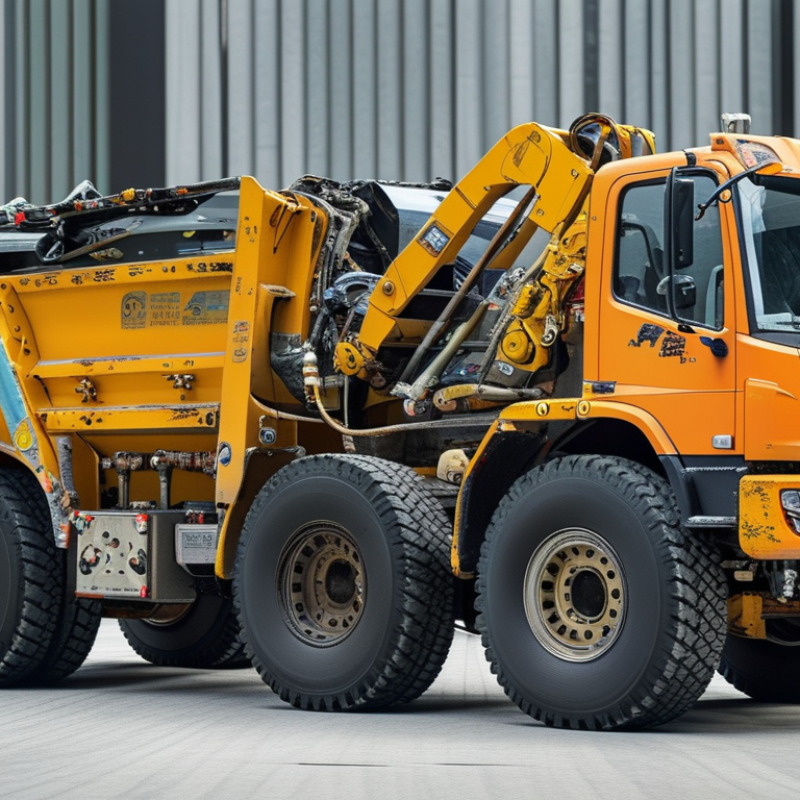
How to Choose the Best Garbage Compactor Chassis from China?
Define the Role and Requirements of a Garbage Compactor Chassis
A garbage compactor chassis is more than a platform for mounting equipment. It carries refuse, supports compaction forces, and protects vehicle stability during daily collection routes. Define these duties before contacting Chinese manufacturers. Record the expected payload, container volume, route distance, road surface, and working temperature. A short urban route needs different performance from a heavy-duty regional route.
Measure the body mounting length, wheelbase, axle ratings, and available hydraulic space. These details prevent costly modifications after delivery. Check the frame thickness, cross-member design, suspension type, braking system, and corrosion protection. The chassis should match the compactor’s operating cycle, not only its advertised payload. Payload figures can look impressive. Real performance depends on waste density, moisture, and uneven loading.
Request engineering drawings, load calculations, inspection records, and clear maintenance instructions. Ask how spare parts are identified and how technical questions are handled after shipment. During evaluation, compare weld quality, hose routing, fastener access, and underbody clearance. Small details matter. A clean specification sheet can still hide poor service access. I would also review sample units or arrange an independent inspection, because assumptions often survive until the first demanding route. Confirm compatibility with the destination market’s safety and vehicle requirements before purchase.
| Evaluation Dimension | Why It Matters | Typical Requirement for a Garbage Compactor Chassis | Recommended Selection Criteria | Verification Method |
|---|---|---|---|---|
| Chassis Category | Determines payload, maneuverability, operating cost, and road access. | Light-duty, medium-duty, or heavy-duty chassis matched to the compactor body and collection route. | Select the lowest gross vehicle weight class that safely meets the fully loaded operating mass. | Compare the chassis gross vehicle weight rating with the calculated loaded vehicle weight. |
| Gross Vehicle Weight Rating | The truck must support the chassis, compactor body, hydraulic system, crew, tools, fuel, and waste without overloading. | Common refuse-collection configurations are approximately 7.5–31 tonnes GVWR, depending on body size and local regulations. | Keep a practical reserve below the legal and technical limit; do not size the chassis only by nominal body volume. | Review the vehicle rating plate, axle ratings, body mass, and a complete payload calculation. |
| Compactor Body Capacity | Body volume affects collection frequency, payload, turning requirements, and route productivity. | Typical rear-loader body volumes range from about 4 m³ to 25 m³. | Match the body volume to the chassis payload and the expected waste density rather than choosing the largest body available. | Calculate usable waste mass using the planned fill volume and expected waste density. |
| Payload Capacity | Payload is often limited by axle loading before the body is physically full. | Required payload commonly falls between approximately 2 and 15 tonnes for municipal compactor applications. | Use the higher of the expected waste mass and the body manufacturer's rated payload requirement as the design basis. | Check the payload calculation against front- and rear-axle load limits. |
| Wheelbase | Wheelbase influences turning radius, weight distribution, body installation space, and stability. | Typical refuse-truck wheelbases are approximately 3,000–5,500 mm, depending on chassis class. | Choose a wheelbase that accommodates the compactor body while preserving maneuverability on the intended route. | Review the body installation drawing, minimum turning circle, and route access constraints. |
| Frame Strength and Mounting | Repeated loading, vibration, and hydraulic operation can create high stress at mounting points. | A reinforced frame and correctly positioned body subframe are required for torsional and fatigue loads. | Confirm frame dimensions, mounting-hole locations, allowable overhang, and subframe design before purchase. | Use approved chassis drawings and obtain written confirmation of body-chassis compatibility. |
| Engine Output and PTO Compatibility | The engine and power take-off system must support driving performance and the hydraulic compaction cycle. | Power requirements commonly range from approximately 100 to 280 kW, depending on vehicle mass, terrain, and equipment configuration. | Verify PTO torque, operating speed, hydraulic pump demand, and available installation space. | Compare the hydraulic system calculation with the engine torque curve and PTO data sheet. |
| Transmission and Driveline | Frequent stops, low-speed operation, steep access roads, and heavy loads place additional demand on the driveline. | Manual or automated/manual transmissions may be suitable; automatic transmission can improve stop-and-go operation where available. | Prioritize low-speed control, suitable startability on grades, and compatibility with the local service network. | Review gear ratios, maximum gradeability, clutch or transmission rating, and service requirements. |
| Axle Configuration | The axle layout controls load distribution, traction, turning performance, and legal road capacity. | Two-axle, three-axle, and four-axle layouts are used for increasing body size and payload requirements. | Select the configuration that keeps each axle within its permitted load under both empty and full conditions. | Perform an axle-load simulation using the actual body center of gravity and payload distribution. |
| Ground Clearance and Suspension | Collection routes may include potholes, uneven roads, ramps, and unpaved access areas. | Suspension and clearance should be suitable for the operating surface, with stable handling under a high and changing load. | Specify road conditions, maximum ramp angle, clearance needs, and expected daily operating hours. | Inspect suspension ratings, tire specifications, approach/departure angles, and test-route suitability. |
| Cab and Operator Safety | Drivers work in dense traffic and frequently enter and leave the cab during collection rounds. | Important features include wide visibility, secure steps, handrails, seat belts, mirrors, reversing alarms, and camera provisions. | Match the cab layout to the crew size and local occupational-safety requirements. | Check safety equipment, visibility zones, access points, and compliance documentation. |
| Emissions and Fuel Type | Emission rules and fuel availability affect legal registration, operating cost, and fleet integration. | Diesel is widely used; alternative powertrains may be suitable where charging or fueling infrastructure is available. | Specify the required local emissions standard and confirm that the complete vehicle, not only the base chassis, can be registered. | Request engine certification, emissions documents, and registration-related technical files. |
| Hydraulic and Electrical Interfaces | The compactor body depends on reliable hydraulic flow, pressure, electrical power, and control signals. | The chassis must provide compatible PTO, hydraulic reservoir connections, wiring capacity, battery output, and control interfaces. | Define hydraulic pressure and flow requirements before finalizing the chassis specification. | Conduct a joint chassis-body interface review using hydraulic and electrical schematics. |
| Dimensions and Legal Limits | Overall length, width, height, and rear overhang determine route access and road legality. | Many completed refuse trucks are approximately 6–12 m long and 2.2–2.6 m wide, subject to local regulations. | Set dimensional limits from the destination country's road laws, depot layout, transfer station, and collection route. | Review certified drawings and verify dimensions after body installation. |
| Corrosion Protection | Waste fluids, moisture, road salt, and frequent washing accelerate corrosion. | The chassis should have suitable coating, protected electrical connectors, sealed components, and corrosion-resistant fasteners where required. | Use enhanced protection for coastal, winter-salted, humid, or high-wash environments. | Request coating specifications, corrosion-protection procedures, and inspection records. |
| Parts, Service, and Delivery Support | Downtime directly affects collection schedules and operating costs. | Essential support includes parts availability, maintenance manuals, diagnostic access, warranty terms, and technical response. | Evaluate total ownership cost, not only purchase price; confirm support for the destination country before ordering. | Obtain a parts list, service schedule, warranty conditions, training plan, and documented delivery scope. |
It carries refuse, supports compaction forces, and protects stability during collection routes. Its design must match payload, container volume, and route conditions. Wet waste adds unexpected weight. That matters.
A 4x2 suits narrow urban streets and moderate collection work. A 6x4 offers better traction on hills and near transfer stations. An 8x4 carries heavier loads but needs wider roads. Bigger is not always better.
Confirm body mounting length, wheelbase, axle ratings, frame width, and rear overhang. Check hydraulic space and mounting points carefully. A mismatch can cause costly modifications. Measure twice.
Compare gross vehicle weight with front and rear axle ratings. Review frame thickness, suspension design, tire capacity, and hydraulic equipment weight. Leave reserve capacity for wet, unevenly loaded waste. Advertised payload alone misleads.
Request engineering drawings, load calculations, inspection records, dimensional data, and road-test results. Ask for maintenance instructions and spare-parts identification. Document samples are better than promises. Paperwork can still hide gaps.
Discuss hydraulic interfaces, power-take-off compatibility, mounting points, tire sizes, corrosion protection, and container dimensions. Send drawings with clear tolerances. A trial assembly may reveal fit problems early. It costs more upfront.
Verify braking data, lighting, steering position, axle ratings, emissions requirements, and required certificates. Confirm overall width and registration requirements. Local rules can make a suitable chassis unusable. Check carefully.
Calculate landed cost, including inspection, transport, insurance, spare parts, tooling, and import charges. Match payment milestones with production progress. Record shipping methods, packaging, inspection dates, and delay responsibilities. Cheap is not always cheap.
Independent inspection is sensible, especially before shipment. Examine welds, hose routing, fastener access, underbody clearance, and frame areas beneath the body. Production batches may vary. Assumptions often survive until the first demanding route.
Confirm local technical support, spare-part availability, maintenance guidance, and response procedures. Review sample units when possible. Keep every specification revision in writing. Verbal agreements can become surprisingly weak.
Choosing the right garbage compactor chassis begins with clearly defining the vehicle’s operating environment, waste volume, route conditions, and required payload. The key question is “How to choose the right chassis for a garbage compactor” while balancing chassis type, wheelbase, dimensions, engine performance, load-bearing capacity, maneuverability, and fuel efficiency. A suitable chassis should provide stable support for the compactor body, reliable braking and suspension, and enough durability for frequent urban or industrial use.
When evaluating manufacturers in China, buyers should assess production capability, material quality, testing procedures, and consistency between specifications and actual performance. It is also important to confirm customization options, compliance documentation, pricing, lead times, spare-parts availability, technical support, and warranty coverage. Comparing the total cost of ownership—including maintenance, energy consumption, repairs, and downtime—can help identify the best long-term solution rather than focusing only on the initial purchase price.

 Yale Truck